INNX helps aerospace and advanced-manufacturing teams validate composite and metallic designs without hiring a full-time analyst. Receive a defined scope, timeline, and fixed-price proposal after a short technical review.
Aerospace startups, composite-part manufacturers, hardware teams heading into a prototype or investor milestone, and engineering firms that need overflow FEA or CFD capacity.
A composite or metallic part has to be released, built or certified, and nobody in-house can say with confidence whether it is strong, stiff or light enough.
Verified FEA or CFD results, failure criteria and margins of safety, stated assumptions and limitations, and a clear recommendation, delivered on a fixed scope and schedule.
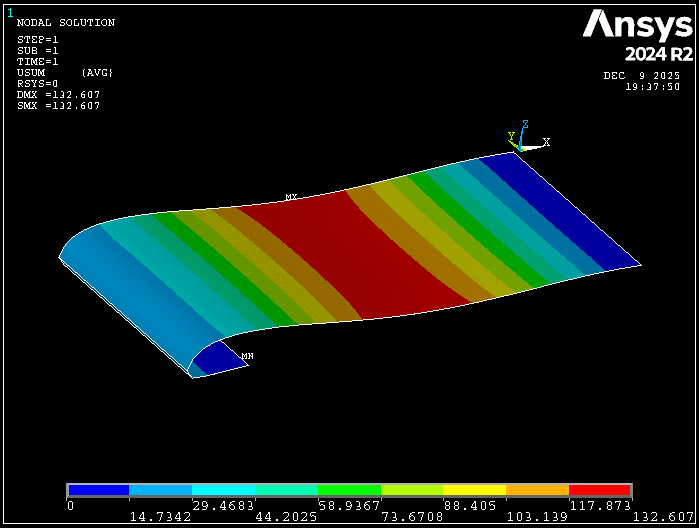
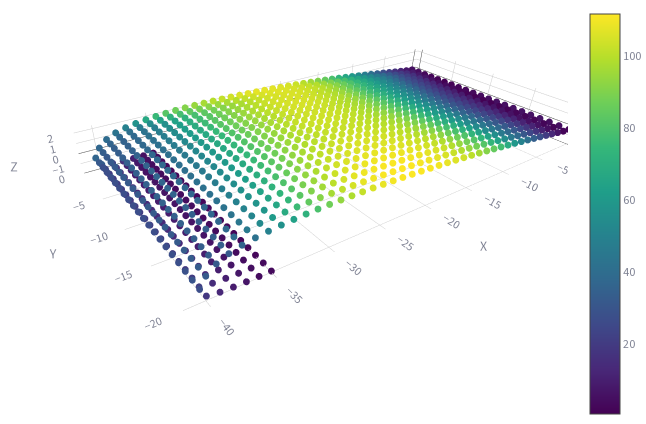
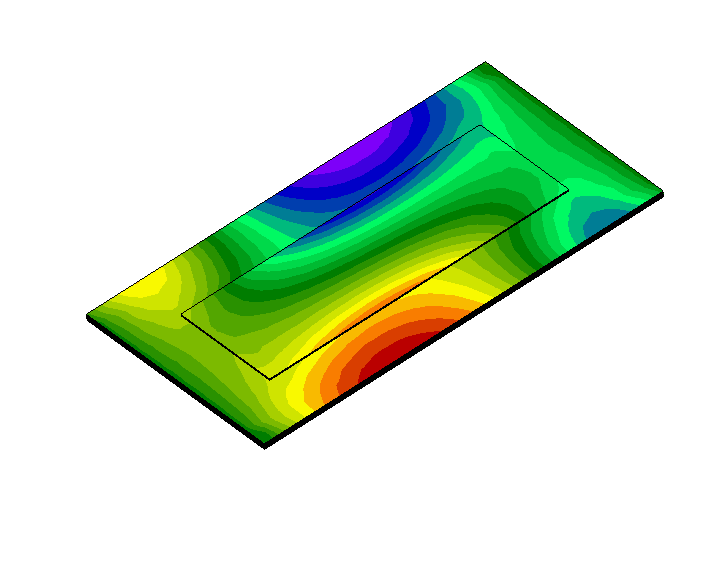
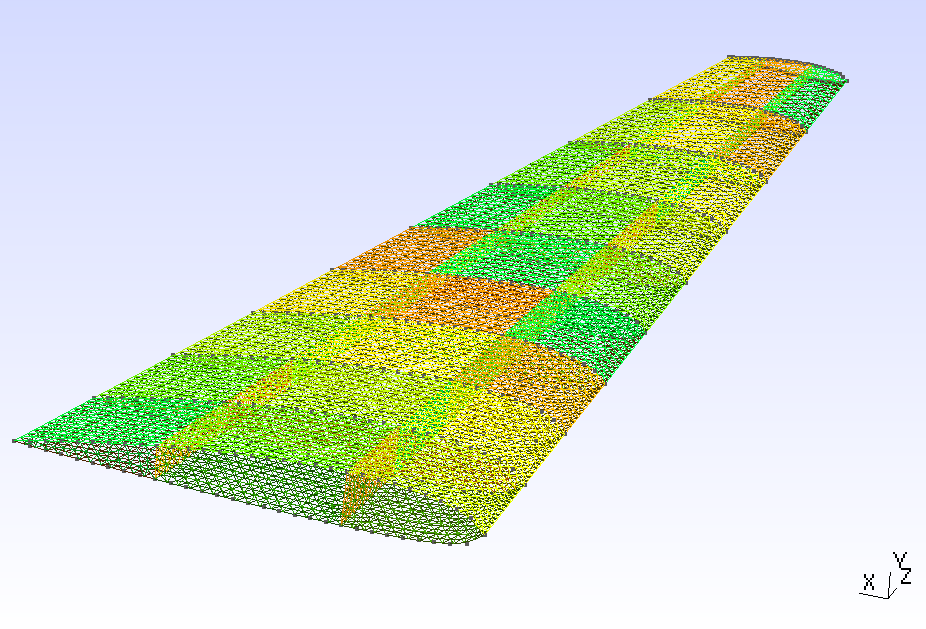
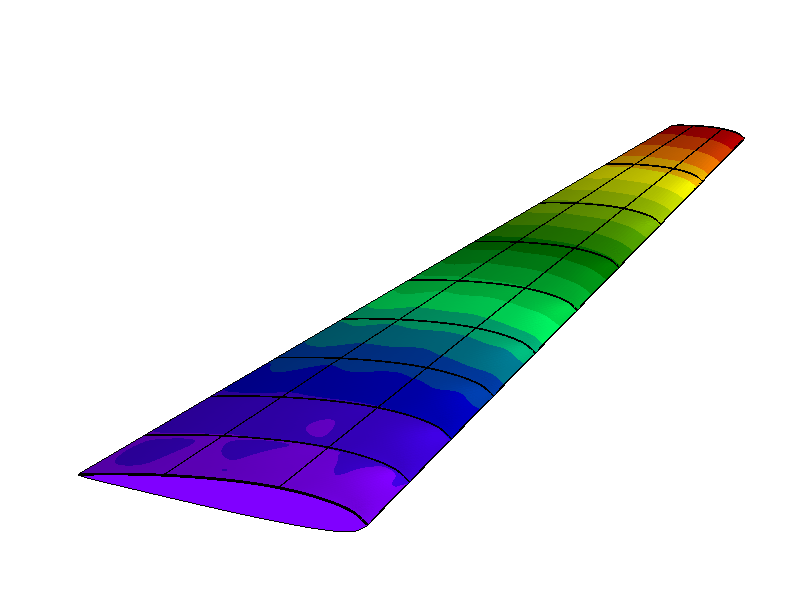
Four services, one goal: structural answers you can act on, without carrying a full-time analyst on payroll.
Ply-by-ply laminate analysis, classical lamination theory, and finite element modeling for composite and metallic structures under static, fatigue, and impact loading. Deliverables include stress/strain results, failure criteria (Tsai-Wu, Puck, max stress/strain), margins of safety, and a report your team or certifying body can act on.
Composite laminate analysis →Aerodynamic, thermal, and multiphase fluid simulation coupled with structural FEA to capture how fluid loads actually deform and stress a structure. Built on OpenFOAM and Code_aster, with custom-coded coupling where commercial pipelines don't reach: transonic flows, combustion environments, injector and turbine geometries.
CFD-FEA coupled analysis →Linear and nonlinear programming applied to structural and laminate design, minimizing weight, cost, or part count against your real constraints of strength, stiffness, and manufacturability. Optimization runs on the same models used for analysis, so results are verified, not just theoretical.
Structural optimization →Physics-informed surrogate models that approximate expensive FEA/CFD runs at a fraction of the compute cost, plus general statistical and ML consulting for engineering data: design of experiments, uncertainty quantification, and model validation.
Physics-informed surrogate models →Also available as standalone engagements: FEA consulting with Code_aster and CFD consulting with OpenFOAM. All services →
Request a Technical Scoping ReviewMost focused engineering-analysis projects range from $3,000 to $15,000. Complex composite, CFD, optimization and certification-support engagements typically range from $15,000 to $40,000+. Hourly technical support is available from $110/hour.
| Engagement | Typical range (USD) |
|---|---|
| Technical review | $500–$1,500 |
| FEA or CFD screening study | $3,000–$7,500 |
| Detailed analysis and report | $7,500–$20,000 |
| Advanced composite, optimization or certification support | $15,000+ |
| Rush work | quoted separately |
Final pricing depends on scope, number of load cases, model maturity, reporting requirements and schedule. Every project is quoted as a fixed price before work begins.
Verification studies against analytical solutions and published benchmarks, written up in the same format as the reports clients receive. These are verification studies, not client results.
 FEA · Verification
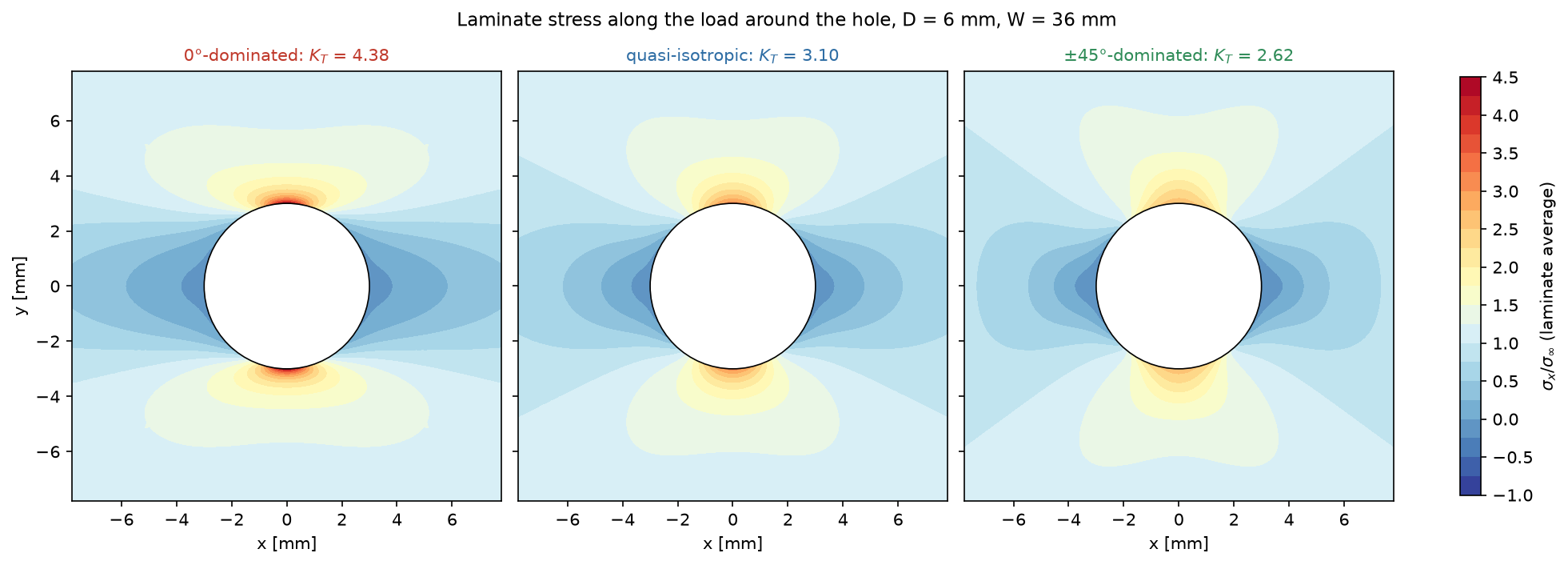
Open-hole tension of three carbon/epoxy lay-ups in Code_aster: K_T 2.62 to 4.38, within 1.1% of theory; a 6 mm hole leaves 23 to 58% of the strength.
Read the report →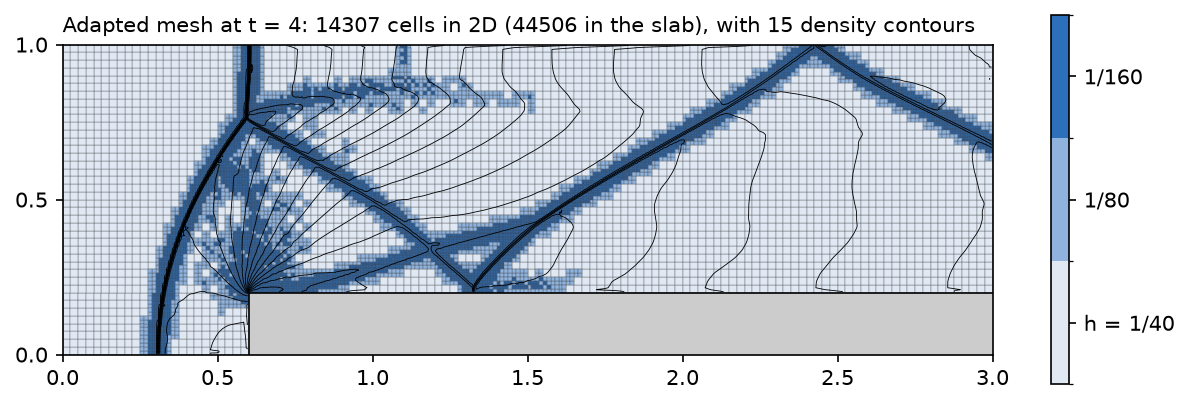 CFD · Adaptive mesh
Mach 3 step in rhoCentralFoam: a wavelet-adapted mesh matches a 4x finer uniform mesh to 0.031 in density with 21% of its cells, at 4.4x the run time.
Read the report →I'm Julio César Ramírez Ceballos, an independent mechanical and structural engineer and the founder of INNX. My background is in composite mechanics: three years of doctoral research, built on top of hands-on work across rocket propulsion, transonic wind tunnel testing, aerospace structural design, turbine combustion chambers and spill-back injectors, industrial robot modeling (inverse kinematics), multiphase fluid simulation, and linear/nonlinear optimization.
I hold a master's degree from ESTIA (École Supérieure des Technologies Industrielles Avancées, France), a Licence Professionnelle in aerospace structures from Université Paris Nanterre, and a BTS in aeronautical maintenance from Mexico. I taught finite element analysis and numerical methods as a professor, and I have published in IEEE Access (2024) on energy management for zero-carbon buildings (DOI: 10.1109/ACCESS.2024.3396816). I work in Spanish (native), French, and English.
That range matters because most structural or CFD problems that stall a project aren't textbook cases. They involve coupled physics, nonstandard geometry, or an analysis pipeline that doesn't exist yet in an off-the-shelf tool. I build what's needed, whether it is in OpenFOAM, Code_aster, Python, or C, rather than forcing your problem into whatever commercial license happens to be on hand.
INNX exists so aerospace, defense, energy, marine, automotive, and sports engineering teams can get that level of analysis on a project basis, without the overhead of a full-time hire.
Based in Mexico City. Working remotely with engineering teams in North America and Europe. Engagements in English, Spanish and French. Also by INNX: Composites – laminate design & analysis platform.
With a technical scoping review request. You get a reply within one business day, then a short call to check fit and scope. Well-defined projects receive a fixed-price proposal with clear deliverables and timeline; unclear or technically risky projects start with a paid scoping engagement, credited toward the project if you proceed. No open-ended hourly billing.
Most focused engineering-analysis projects range from $3,000 to $15,000. Complex composite, CFD, optimization and certification-support engagements typically range from $15,000 to $40,000+. Hourly technical support starts at $110/hour. The final fixed price depends on scope, load cases, model maturity, reporting requirements and schedule. See typical project ranges.
Turnaround depends on the size and complexity of the analysis. A single laminate check runs faster than a coupled CFD-FEA study on a full assembly. Your proposal includes a firm timeline once scope is defined.
Yes. Signing an NDA before reviewing your geometry, loads, or design data is standard practice.
Both. Engagements range from early-stage teams validating a first design to established manufacturers extending an in-house team's capacity for a specific project.
OpenFOAM for CFD, Code_aster for FEA, and Python and C for custom analysis, optimization, and automation, including in-house-built solvers where off-the-shelf tools fall short.
Aerospace, defense, energy, marine, automotive, and sports equipment: any team building load-bearing composite or metallic structures that need to survive real-world mechanical and fluid loading.